
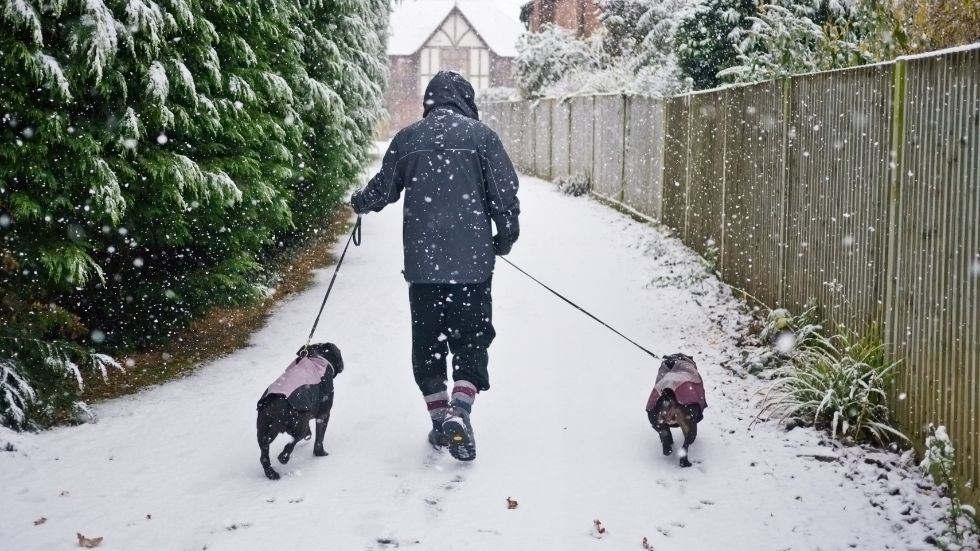
Winter Walking Tips for Columbus Pet Parents
Cold Ohio winters don’t have to stop your pet’s daily walks — but a few smart adjustments can keep them safe, comfortable, and happy:
Keep Walks Short & Sweet
- Shorter walks are better in extreme cold. Watch for slowing down, lifting paws, shivering, or reluctance to keep moving — these are signs it’s time to head home.
Dress for the Weather
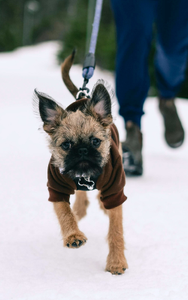
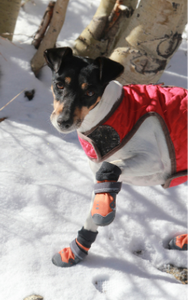
- Many dogs, especially seniors, small breeds, and short-haired pets, benefit from jackets or sweaters in winter. Make sure clothing fits well and doesn’t restrict movement.
Protect Those Paws
- Snow, ice, and road salt can irritate paw pads. If your pet will allow them, booties can help protect sensitive feet. After walks, wipe paws with a warm, damp cloth to remove salt and debris.
Watch for Frostbite
Frostbite most often affects ears, tails, noses, and paws. Signs include:
- Pale, cold, or gray skin
- Swelling or blisters
- Pain when touched
If you notice these symptoms, bring your pet inside and contact us for guidance.
Noticing Stiffness or Slower Movement?
Cold weather can make arthritis more noticeable in senior pets. If your dog or cat seems stiff, hesitant on walks, or slower to get moving, we’re here to help.
At Animal Hospital of Shawnee Hills, we offer personalized arthritis care — including traditional treatment options, rehabilitation therapy with Dr. Jake, and acupuncture with